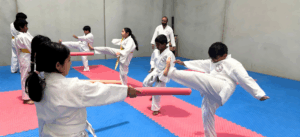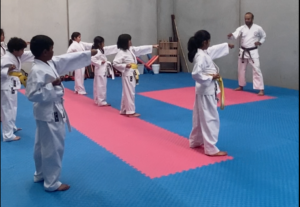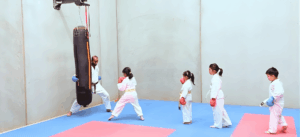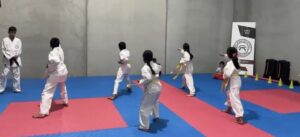
When most people think of karate, they imagine scenes from movies—flying kicks, dramatic fights, and one person taking on multiple opponents. While entertaining, these ideas often create confusion about what karate really is.
At Lion Budokan Karate International (LBKI) in New Zealand, karate is not about showing off or fighting—it’s about awareness, control, and personal development.
Let’s break down some of the most common self-defence myths and explore what karate actually teaches.
Myth 1: Karate Is Just About Fighting
The Reality
Karate is not about fighting—it’s about avoiding conflict whenever possible.
One of the first things students learn is awareness:
- Understanding their surroundings
- Recognising potential risks
- Staying calm under pressure
👉 The goal is simple: stay safe, not prove strength
In Budokan Karate, respect and control come first. Physical techniques are always the last option, not the first.
Myth 2: You Need to Be Strong to Defend Yourself
The Reality
Karate is designed for anyone, regardless of size or strength.
Instead of relying on power, students learn:
- Balance and positioning
- Timing and coordination
- Using their body efficiently
👉 It’s about technique—not brute force
This is why karate works for children, teens, and adults alike.
Myth 3: Knowing Moves Is Enough
The Reality
Knowing a technique is one thing—using it under pressure is another.
That’s why karate focuses on:
- Repetition
- Consistent practice
- Building muscle memory
Over time, movements become natural and automatic.
👉 You don’t rise to the occasion—you rely on your training.
Myth 4: Karate Is Only for Kids or Athletes
The Reality
Karate is for everyone.
While children benefit from improved confidence and discipline, adults also gain:
- Better fitness
- Stress relief
- Practical self-defence skills
At LBKI New Zealand, students of all ages train at their own pace in a supportive environment.
Myth 5: Sport Karate Equals Real Self-Defence
The Reality
There is a difference between sport karate and real-world self-defence.
- Sport karate focuses on points, speed, and rules
- Real self-defence focuses on awareness, control, and safety
At LBKI, we teach practical application through Bunkai—understanding how techniques work in real situations.
👉 This helps students build confidence in everyday scenarios, not just competitions.
What Karate Actually Teaches
Beyond techniques, karate helps develop important life skills:
✔ Confidence
Students learn to carry themselves with confidence, which can help them avoid unwanted situations.
✔ Discipline
Regular training builds focus, patience, and consistency.
✔ Awareness
Students become more aware of their surroundings and how to respond calmly.
✔ Control
Karate teaches when to act—and more importantly, when not to.
Why Parents Choose Karate for Their Children
Many parents in New Zealand choose karate because it helps children:
- Build confidence in social situations
- Improve focus and listening skills
- Develop discipline and respect
- Stay active in a structured environment
👉 It’s not just an activity—it’s a foundation for personal growth.
🚀 Take the First Step
Karate is not about being aggressive or fearless.
It’s about becoming:
- More confident
- More focused
- Better prepared for real-life situations
At LBKI New Zealand, we create a safe and supportive environment where every student can grow at their own pace.
👉 Ready to move beyond the myths?
Join LBKI Karate in New Zealand and discover how training can build real confidence, awareness, and self-defence skills.