It rarely starts as a serious concern.
At first, it’s small things, your child needing to be called a few times before responding, leaving tasks unfinished, or drifting away the moment something requires effort. You assume it’s a phase. Most parents do.
But over time, those small moments begin to repeat more often, and you start to wonder if something deeper is going on.
Across Australia and New Zealand, many parents are noticing the same pattern. According to insights from the Australian Institute of Health and Welfare (AIHW) and Raising Children Network, modern routines, especially screen-heavy ones, are quietly affecting how children build focus, patience, and behaviour.
The shift many parents are now making isn’t towards stricter rules, but towards structured activities that help children develop these skills naturally.
And this is where karate is beginning to stand out.
Why Kids Struggle with Focus Today
Focus isn’t something children automatically have; it’s something they develop.
The challenge is that today’s environment doesn’t always support that development. Children move quickly between screens, schoolwork, and entertainment, often without needing to stay engaged with one thing for long.
Over time, these conditions cause the brain to expect constant stimulation.
So when a child is asked to sit, listen, or complete something step by step, it can feel unusually difficult, not because they are unwilling, but because the skill itself is still developing.
Common Parenting Challenges (Screen Time, Attention, Behaviour)
For most families, the issue shows up in everyday routines.
Getting ready for school takes longer than expected. Homework becomes a struggle. Simple instructions need to be repeated. And even when children understand what to do, staying with the task becomes the real challenge.
Screens often make this more noticeable. They offer quick rewards and instant engagement, which can make slower tasks feel frustrating in comparison.
Parents in areas like Truganina, Tarneit, and Hoppers Crossing are increasingly sharing similar concerns, not just about behaviour, but about attention, consistency, and follow-through.
And this is where many begin to realise: it’s not just about managing behaviour, it’s about building focus.

How Karate Training Supports Discipline & Focus
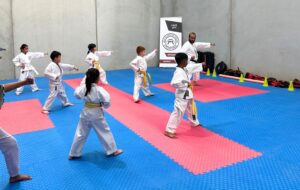
Karate doesn’t force children to focus. It creates an environment where focus becomes natural.
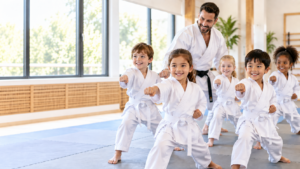
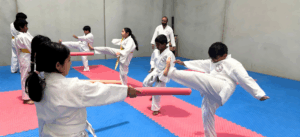
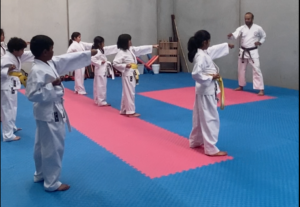
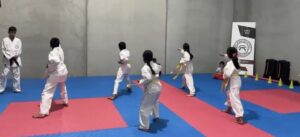
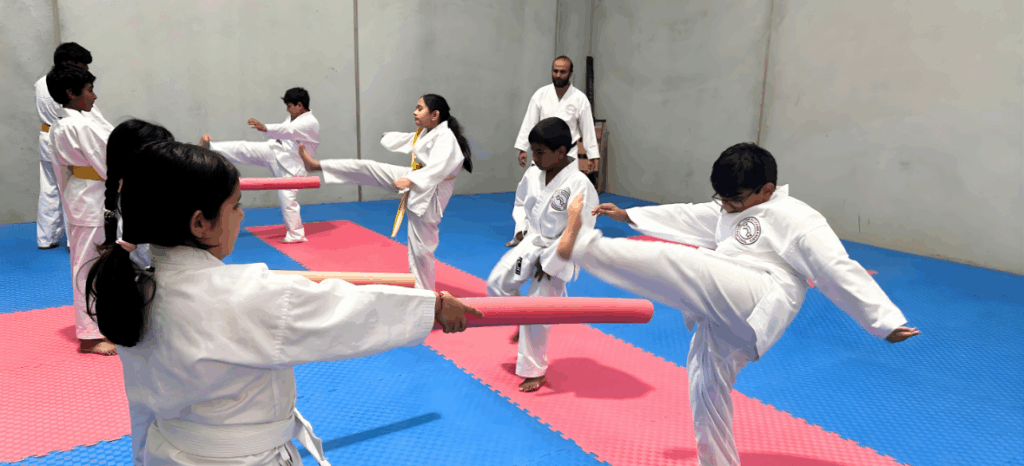
In the regular classroom, instructions are straightforward and understandable. In this environment, kids are guided to listen, observe and also respond without constant repetition. Distractions are eliminated, and habit is fostered by the structure’s consistency.
What makes it effective is the combination of movement and discipline.
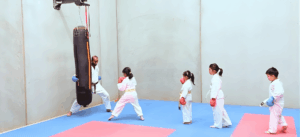
Instead of asking children to sit still and concentrate, karate allows them to move with intention. That movement helps channel energy, making it easier for them to stay engaged.
Research funded by organisations such as Sport Australia indicates that when done regularly, planned physical activities can gradually enhance behaviour, self-control, and concentration.
For many families seeking answers in Truganina, karate stands out for its balance.
What Kids Experience in Classes
From a youngster’s perspective, karate appears regimented but not overpowering.
There is a clear flow to each class. Children learn to comprehend what is expected of them, including when they should listen and behave. That predictability helps them stay engaged without feeling pressured.
They also experience small wins, learning a movement, following instructions correctly, or simply staying focused for longer than before.
For children who are shy or easily distracted, this kind of environment can feel surprisingly comfortable.
If you’re unsure, observing a class or starting with a trial session in Truganina can often give you a clearer picture than any explanation.
When Parents Start Seeing Changes
The changes are usually subtle at first. You might notice your child responding a little quicker when called. Or staying with a task slightly longer. Or needing fewer reminders for simple things.
These minor changes matter.
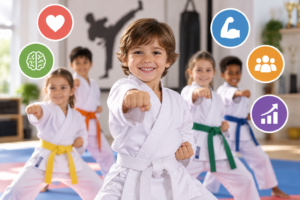
They gradually develop stronger habits, such as greater listening, patience, and more consistent follow-through.
For many parents, incremental development is more comforting than rapid, temporary remedies.

How to Know If It’s Right for Your Child
Karate is not about your child’s innate discipline.
The question is whether they would benefit from a structured environment that allows them to develop their attention at their own pace.
It might be worth investigating whether your child struggles to remain engaged with a task for the full duration, requires repeated instructions, is easily distracted and irritated, or has a lot of energy but no clear outcome.
For families in Truganina and surrounding areas such as Tarneit and Hoppers Crossing, a trial class is often the most convenient way to get started.
It keeps the decision simple, without pressure.
Conclusion
When a youngster fails to listen or focus, it’s natural to believe something has to be fixed. However, often what kids need is not correction but the opportunity to develop a talent.
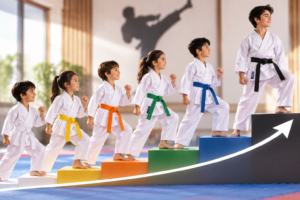
Karate provides that chance in an organised, supportive manner. Not as a quick fix but as a gradual process that helps youngsters develop attention, discipline, and confidence over time.
Karate is more than just a solution; it’s a meaningful step for families seeking lasting change.
FAQs
Does karate help youngsters focus?
Yes. Of course. Karate teaches youngsters to listen, observe, and follow directions in a disciplined setting, which naturally enhances attention over time.
Is martial arts helpful for behaviour?
Yes. Martial arts promote patience, discipline, and respect, and also improve kids’ energy management skills.
How many lessons per week are ideal?
Two to three lessons each week is usually sufficient to establish regularity without overloading the youngster.
Is karate appropriate for shy children?
Yes. Karate’s structured and encouraging atmosphere allows timid youngsters to gradually build confidence without feeling pressured.