As a parent, you constantly worry about the decisions that will shape your child’s future and habits. You must ensure these habits positively impact your child’s discipline, confidence, and physical health. Enrolling your child in a martial arts class is one of the best investments you can make as a parent.
But the moment you start searching for which class your child should pick, you get overwhelmed by the multitude of choices. The question quickly becomes: Karate vs Other Martial Arts, which discipline offers the best foundation for a child starting martial arts in 2026?
At LBKI Australia, we believe that for a child’s foundational development, instilling traditional values, comprehensive training, and structured progression of karate make it an unparalleled choice. We want to help you cut through the confusion and understand why our karate style is often the best for child development and long-term engagement.
Beyond kicks
The main differences between karate and other martial arts often lie in philosophy and emphasis. Some modern martial arts place a strong focus on competition or a particular set of abilities. These may not prioritise a young child’s holistic development, despite their efficacy. Karate, particularly the traditional styles we teach at LBKI, is fundamentally a system of self-improvement and self-defence, built on a tripod of core values.
- Respect (Rei):
The discipline begins and ends with respect for the instructor, for fellow students, and for oneself. This structured environment helps children thrive by setting clear boundaries and expectations, which translate into improved behaviour at home and at school. - Discipline (Seishin):
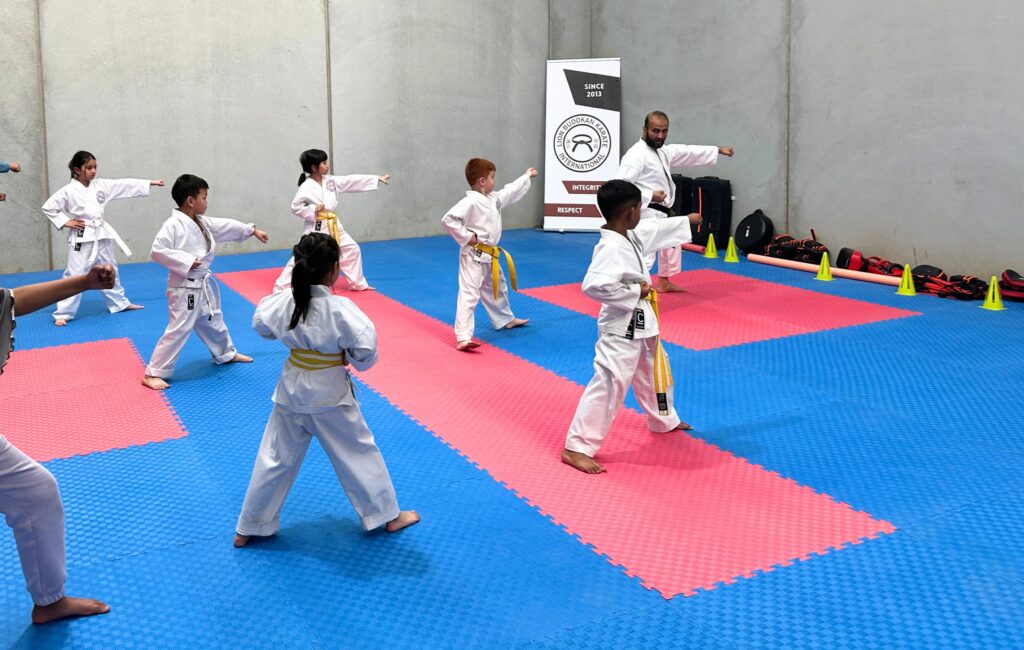
Karate requires sustained focus and perseverance. Patience and mental toughness are enhanced by practising katas and fundamental skills (kihon). These skills are essential for both life in general and academic success. - Balance (Striking and stance):
Karate offers a well-balanced system of hand techniques, footwork, and strong, proper postures, unlike other systems that focus primarily on one aspect. This method provides several chances for physical literacy and is an excellent place for any child to start.
For a parent looking to instil core values alongside physical training, karate offers the most robust philosophical framework when considering Karate vs Other Martial Arts for their son or daughter.
A practical comparison between the martial arts
To honestly decide between the options to see which martial arts option is best for child development, let’s look at how karate stacks up against the most popular alternative your child might encounter when starting martial arts in 2026.
Karate vs taekwondo
Taekwondo
Highly focused on spectacular, sport-oriented high kicks and jumping techniques. It is often taught in a way that prioritises speed and agility over power and base.
Karate
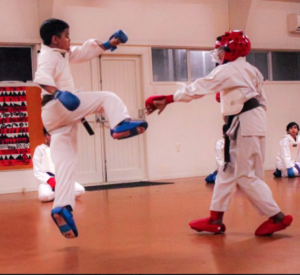
Emphasises strong, low stances and a balanced approach between punches, blocks, and kicks. The focus is on power generation from the core and practical self-defence. While taekwondo is great for competition, karate is often regarded as more useful for real-world situations and better at developing full-body coordination in young children.
Karate vs Brazilian Jiu-Jitsu and Judo
Brazilian Jiu-Jitsu and Judo
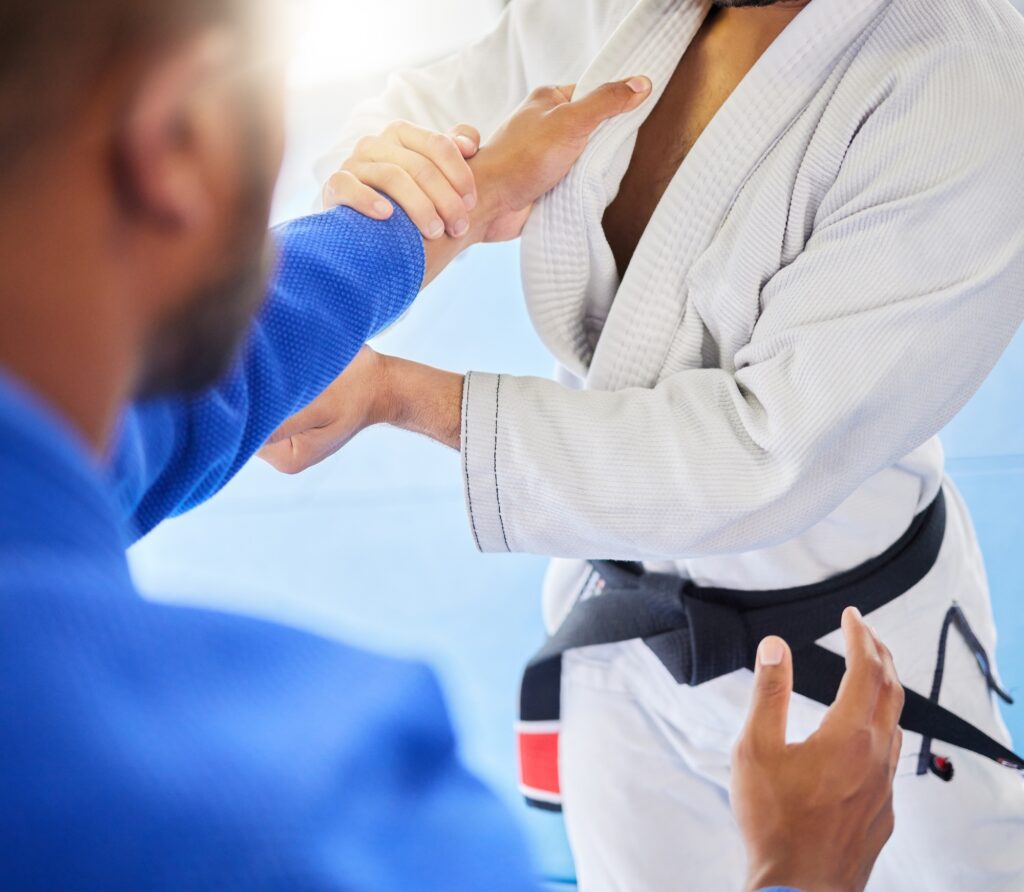
These are grappling arts, focused on throws, joint locks, and ground fighting. They are incredibly effective, but teach children to take an opponent to the ground. This is a situation that most parents would prefer their child to avoid.
Karate
Teaches stand-up self-defence. The core strategy is avoidance and de-escalation, followed by practical standing techniques if necessary. For a child, mastering how to handle confrontation while remaining on their feet is a safer and more empowering first lesson than learning how to fight on the ground.
Karate vs Mixed Martial Arts (MMA)
MMA
This is designed for a cage environment and often uses striking, grappling, and wrestling. While it is an ultimate sport, its high intensity and the high risk of injury make it unsuitable for a young child.
Karate
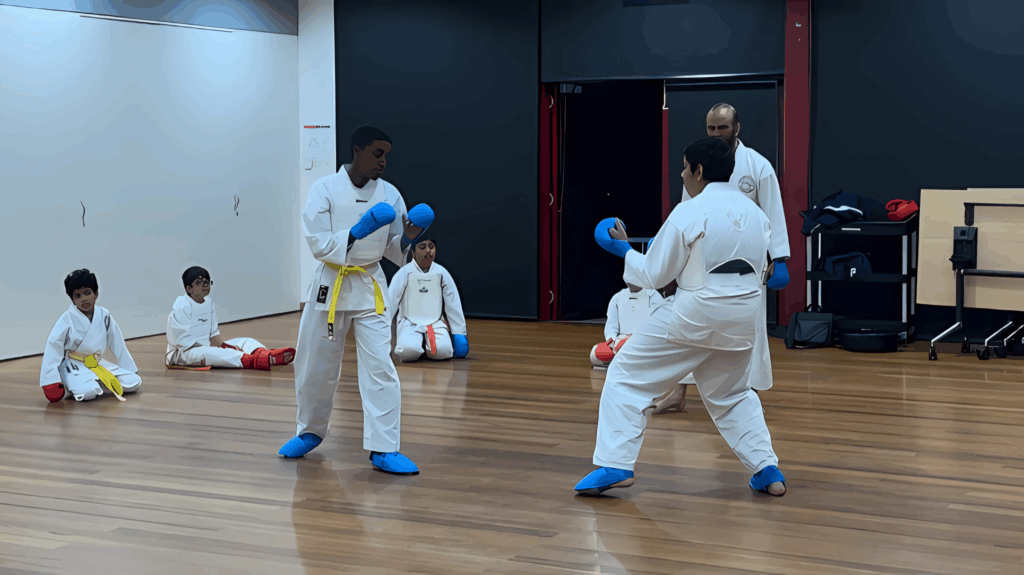
It offers a secure, controlled, and progressive atmosphere, making it an excellent choice for developing initial confidence and discipline.
Karate certainly wins the discussion in terms of the benefits it provides to youngsters.
The tangible benefits of karate for kids in 2026
When you send your child to LBKI, you are not just signing them up for an hour of exercise a week; you are committing to a program that delivers profound benefits.
- Improved mental focus and school performance
The rigorous practice of katas and the need to follow sequences demand intense concentration. Children who practice karate often show a marked improvement in their ability to focus in the classroom, follow multiple instructions, and manage distractions. - Physical health and coordination
Karate uses every part of your body. Karate helps children build strong core muscles, improve their balance and agility, and achieve excellent cardiovascular fitness. - Real-world confidence and self-defence
The most significant outcome of Karate training is the quiet confidence it instils in you. A child who is aware that they can defend themselves is less likely to become a target. Our LBKI instructors teach that true strength lies in avoiding conflict. This emphasis on non-aggression is a key differentiator when distinguishing karate from other martial arts.
Selecting LBKI Australia as your destination
There are plenty of centres that provide martial arts. It is crucial to consider the quality of teaching and the atmosphere, especially when your child is planning on enrolling in martial arts in 2026.
We also combine traditional Shotokan Karate with modern, child-centric teaching models at LBKI Australia. We know that a three-year-old child cannot learn in the same way as a twelve-year-old, and our programs are designed to suit each child’s specific developmental stage.
We offer:
- Professional, Seasoned Senseis:
Our teachers are not merely experienced martial artists; they are professionals who have undergone training to mentor, inspire, and help your children climb up each belt grade. - Positive, Supportive Community:
We create an environment where all students applaud their peers. This teaches children that a sense of belonging and being respected is equally important as the physical skills they learn. - A Roadmap to Mastery:
From white belt to the much-desired black belt, our system offers precise, attainable targets that hold kids’ attention, motivate them, and keep them striving toward a higher goal.
If you are considering the options in the Karate vs Other Martial Arts dilemma, we would like you to experience the difference: a place where your child will learn to be strong, respectful, and confident both on and off the dojo floor.
Conclusion
Choosing the perfect martial arts may be a subjective matter. Still, if your objective is to instil in your child a lasting sense of respect, unrivalled discipline and overall physical literacy in a non-threatening and nurturing atmosphere, you can never go wrong with karate.
Take the first step towards giving your child the gift of inner and outer strength as you plan 2026. Choose the tried and tested way of character development and practical self-defence.
Looking for challenging Karate classes in Melbourne? We invite you to attend and see what we do and how karate can transform your child’s life!