If your child has recently started karate, it probably won’t be long before they ask one of the biggest questions: “How long will it take me to get a black belt?”
Parents often wonder the same thing.
There isn’t one fixed answer to how long to get a black belt in karate, because progression isn’t based on time alone. A child’s attendance, age, consistency, technical development and readiness for grading can all affect how long the journey takes.
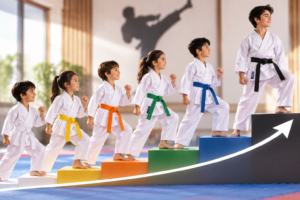
A black belt is something students work towards gradually, one grade at a time. For most children, the important part isn’t reaching it as quickly as possible, but making sure they have genuinely developed the skills required along the way.
How Long Does It Take to Get a Black Belt in Karate?
Earning a black belt generally takes several years of regular training. The exact timeframe can vary considerably between students and karate organisations because grading systems and requirements differ.
Two children who start on the same day won’t necessarily reach each belt at exactly the same time. One may attend more regularly, while another may need additional time to become comfortable with particular techniques. That’s completely normal. Rather than treating black belt as a deadline, it is better to think of it as the result of steady progress through each stage of training.
Why Does Earning a Black Belt Take Years?
Karate isn’t a course that students simply complete by attending a certain number of classes.
At each level, they learn techniques and skills that provide the foundation for what comes next. As students progress, they are expected not only to learn new material but also to improve what they have already been taught. This takes practice.
A technique that feels difficult when a child first learns it can gradually become more natural. The same applies to stances, movement, kata, and other parts of karate training. Taking time between grades gives students an opportunity to practise these skills rather than rushing from one belt to another.

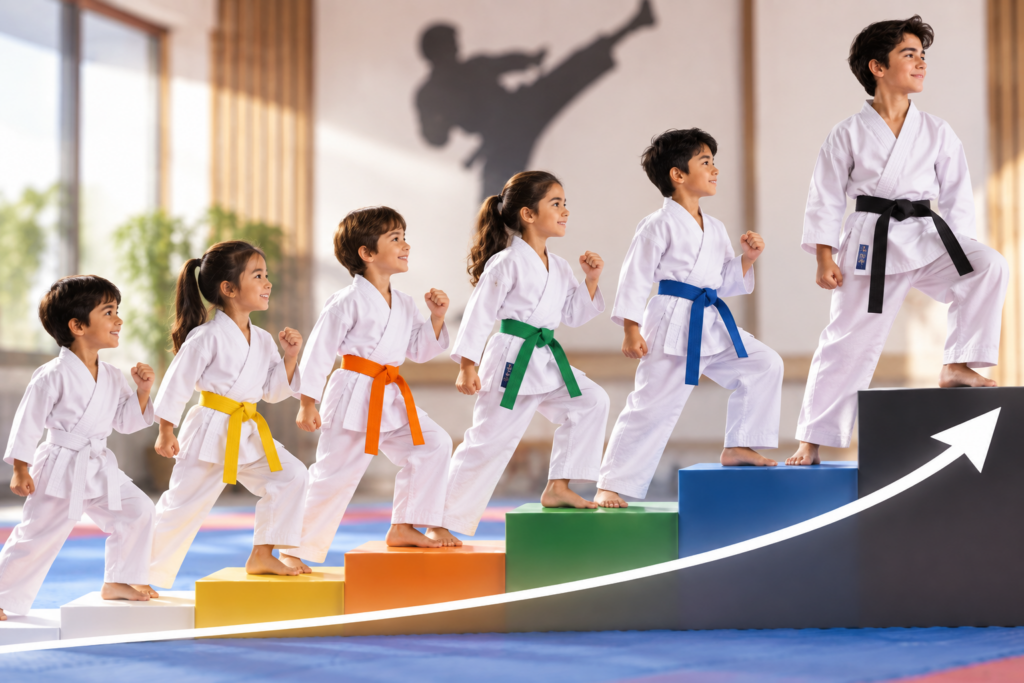
How Does Karate Belt Progression Work?
Most karate organisations use a grading system that allows students to progress through a series of levels before reaching black belt. The exact belt colours, order and grading requirements can differ depending on the karate style and organisation.
At the beginning, students concentrate on the foundations. They learn basic techniques, stances, movement and how to participate appropriately in a karate class. As they move through the grades, the training becomes more demanding. Students are introduced to additional techniques and are expected to demonstrate greater accuracy, control and understanding.
By the advanced grades, the expectations are naturally higher. Students need to show that they can perform what they have learned consistently rather than simply remember the movements for a grade.
Each stage prepares them for the next.
What Can Affect How Long It Takes?
There are several reasons why one child may progress differently from another.
Regular Training
Attending classes consistently gives children more opportunities to practise what they have learned. Long gaps between classes can make it harder to remember techniques and maintain progress. Regular attendance doesn’t guarantee faster belt promotion, but it does give students the consistency they need to keep developing.
Individual Progress
Children don’t all learn at the same pace.
One student may pick up a new movement quickly but need more time with another part of their training. Another may take longer initially and then make significant progress once they become more experienced. Neither approach is wrong. Karate progression should recognise what the individual student can demonstrate rather than how quickly someone else progressed.
Age and Experience
Age can influence how children understand and perform certain techniques, but starting younger doesn’t automatically mean reaching black belt sooner. Younger students may need more time with coordination or detailed instructions, while older beginners may understand certain concepts more quickly. What matters is whether the student is developing appropriately for their age and level.
Grading Standards
Karate schools and organisations can have different requirements for promotion.
Students should be ready for the next grade before moving forward. A belt has more meaning when it represents skills the student can genuinely demonstrate, rather than simply the amount of time they have attended classes.
Can a Child Progress Faster by Training More Often?
Training regularly can certainly help. More practice gives students additional opportunities to work on techniques, remember corrections and become comfortable with what they’re learning. However, attending more classes doesn’t automatically mean earning belts faster.
A child still needs to meet the requirements of their grade. If a particular technique needs more work, taking additional time to develop it is more useful than progressing before they are ready.
The goal should be steady progress, not the fastest possible black belt.
What Changes as a Student Moves Towards Black Belt?
The difference between a beginner and an advanced student isn’t simply the number of techniques they know. In the early stages, children often need regular reminders about where to stand, how to position themselves and what comes next. Much of their attention goes into remembering the basics.
As they gain experience, those foundations become more familiar. They can begin concentrating on finer details such as timing, control, accuracy and the quality of their movement.
Advanced students are also expected to take greater responsibility for their own training. Instead of relying on constant reminders, they should increasingly recognise what needs improvement and work on it.
That gradual change is an important part of the journey towards black belt.
Should Parents Look for Fast Black Belt Programs?
How quickly a school awards a black belt shouldn’t be the main reason for choosing a karate program.
A shorter timeline can sound appealing, particularly to an enthusiastic child, but the belt itself is meaningful only when it reflects genuine development.
Parents are better off looking at the quality of instruction, how students are assessed and whether children are expected to demonstrate the requirements of each grade before progressing.
There is no need to rush something that is intended to be earned over time.
What Happens After Black Belt?
Black belt isn’t the end of karate training.
Reaching this level shows that a student has developed a strong foundation and progressed through the required stages of their earlier training. From there, they can continue learning more advanced techniques and deepening their understanding of karate.
Many students continue training for years after receiving their first black belt. In that sense, earning a black belt is an important milestone, but it isn’t a graduation from karate.
How Long to Get Black Belt in Karate: The Final Answer
There isn’t a single timeline that applies to every child. Reaching black belt usually involves several years of consistent training, progressing through the required grades and demonstrating the skills expected at each stage. Rather than asking how quickly a child can reach black belt, it can be more useful to ask whether they are making genuine progress.
Every belt along the way should represent something they have learned and earned. When a child eventually reaches black belt, that journey is what gives the achievement its meaning.