If you’re considering karate for your child, you may be wondering whether it will genuinely be good for them or simply become another after-school activity that lasts a few weeks.
It’s a reasonable question. Children have plenty of activities to choose from, and what works brilliantly for one child may not suit another. Karate offers something slightly different because children are learning a skill while being active, working towards individual goals and training alongside other students.
So, is karate good for children? For many kids, it can be. But the quality of the program, the instructor and whether your child actually enjoys training all matter.
Is karate actually a good activity for my child?
Karate can give children a structured place to learn, move and challenge themselves. A good children’s class isn’t about expecting perfect techniques or pushing every student at the same pace. Children are shown a skill, given time to practise it and encouraged to keep working when they don’t get it right straight away. That process is an important part of what children can gain from karate.
What Do Children Actually Learn in Karate?
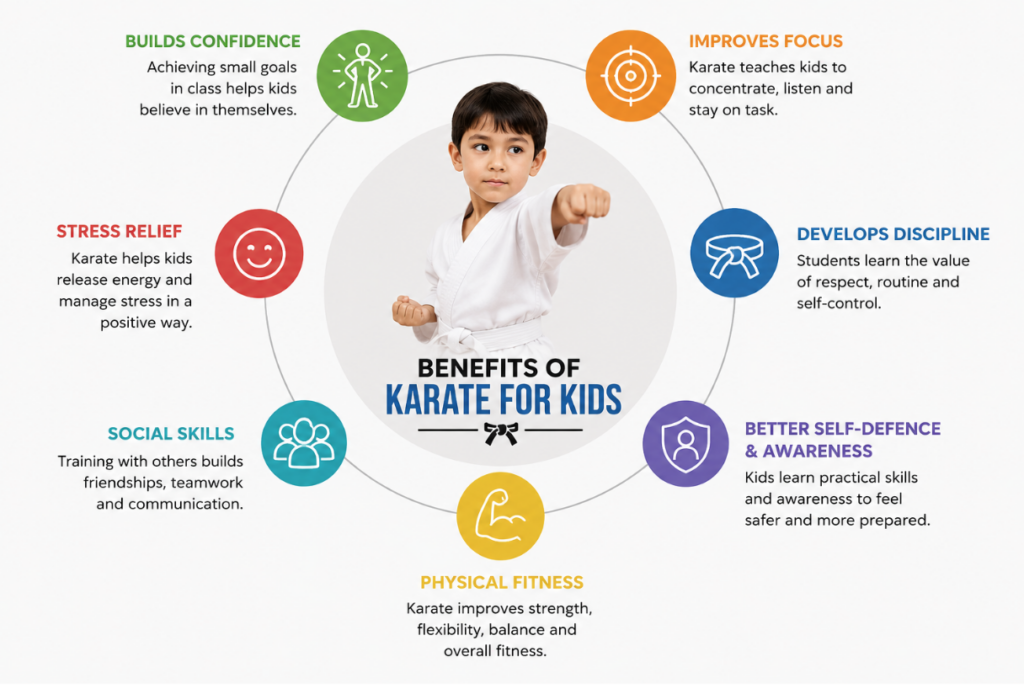
The benefits of karate for kids aren’t limited to punches, kicks and physical fitness. Much of the learning happens through the way classes are structured.
Learning That Progress Takes Practice
Children are used to some things happening quickly. Karate usually doesn’t work that way.
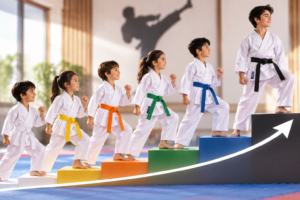
A new stance, kick or kata may take many attempts before it starts to feel comfortable. Children have to practise, listen to corrections and try again. Gradually seeing themselves improve can help them understand that being unable to do something today doesn’t mean they won’t be able to do it tomorrow.
Working Towards Their Own Goals
Karate gives children clear things to work towards. At first, the goal might simply be to remember a movement or improve a stance. Later, they may work towards learning a kata, preparing for a grading or progressing to another belt. These goals give children a way to see their own progress rather than constantly comparing themselves with someone else.
Learning How to Handle Mistakes
Children make plenty of mistakes when learning karate. They forget movements, lose their balance and sometimes find a technique frustrating. That’s normal.
A supportive instructor helps them correct the mistake and have another go. Over time, children can become more comfortable with the idea that making a mistake is simply part of learning something new.
Taking Responsibility for Their Progress
As children gain experience, they come to understand that improvement requires their own effort. The instructor can teach and encourage them, but students still need to listen, practise and participate. This gives children some responsibility for how they progress through their training.
Physical Benefits Without Making Fitness the Whole Point
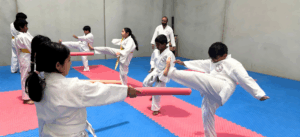
Karate naturally involves plenty of movement. Children practise stances, punches, kicks and combinations while moving around the training area. This gives them opportunities to develop coordination, balance, flexibility and general fitness.
One of the useful things about karate is that exercise isn’t necessarily the child’s main focus. They’re concentrating on learning the technique, while the physical activity happens as part of the training.
Can Karate Suit Different Types of Children?
There isn’t one particular personality that a child needs to have before starting karate.
A quieter child may appreciate being able to progress individually without having to compete for attention. An energetic child may enjoy having a structured place to move and learn. Children who don’t particularly enjoy team sports may also like being part of a group while still working towards their own goals.
That doesn’t mean karate will suit every child. But children don’t need to arrive confident, outgoing or naturally athletic to give it a try.
What Karate Won’t Do Overnight
It’s easy to read about the benefits of karate for kids and expect dramatic changes after a handful of classes. In reality, development tends to be much more gradual.
A shy child isn’t necessarily going to become confident after two lessons. A child who finds concentrating difficult isn’t suddenly going to have perfect focus. And attending karate doesn’t automatically make a child disciplined.
These qualities develop through experience, practice and consistency. Often, the changes are small at first: remembering a routine without help, volunteering to demonstrate something, staying with a difficult technique for a little longer or simply walking into class feeling more comfortable than they did a month ago.
Those small moments of progress matter.
When Might Karate Not Be the Right Fit?
Karate is not automatically the right activity for every child.
Some children may prefer team sports, swimming, dance or another activity entirely. Others may simply not connect with a particular instructor or class environment.
If a child repeatedly dreads going to class, doesn’t feel comfortable with the teaching style or shows no interest after having enough time to settle in, it’s worth considering whether that particular program is right for them. The aim shouldn’t be to make a child love karate. It should be about finding an activity they can participate in and enjoy.
What Makes a Good Kids’ Karate Program?
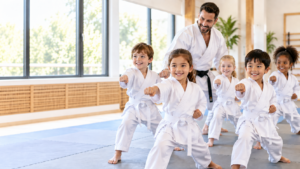
The instructor and class environment can make a significant difference to a child’s experience. Children should be taught in a way that suits their age and experience. Instructions need to be clear, beginners should be given time to learn, and discipline should come from consistent expectations rather than intimidation.
There should also be a balance between structure and encouragement. Children need boundaries in class, but they also need to know that making mistakes while learning is perfectly normal.
How Can Parents Tell If Their Child Is Enjoying Karate?
Don’t judge the experience only by whether your child earns belts quickly.
Instead, pay attention to the smaller signs. Do they talk about something they learned? Are they keen to show you a technique at home? Do they walk into the dojo more comfortably than they did when they started? Are they proud when they finally learn something they found difficult?
Those reactions can tell you much more about whether karate is working for your child than the speed of their progression. A trial class is also useful before committing to a program. It allows both you and your child to see what the instructor, class structure and overall environment are actually like.
So, Is Karate Good for Kids?
For many children, yes. Karate offers physical activity, individual progression and the opportunity to practise skills such as listening, patience, persistence and self-control within a structured environment. But the benefits of karate for kids don’t come simply from putting on a uniform and attending a class. The right instructor, an appropriate program and regular participation all make a difference.
Most importantly, your child should enjoy being there. If you’re wondering whether karate is right for your child, you don’t need to decide based on a list of promised benefits. Let them experience a class, give them time to settle in and see how they respond. That’s often the simplest way to find your answer.